Showing posts with label kitchen. Show all posts

Wednesday, January 07, 2009

The Ultimate Chopper

Photobucket

Apologies for the looooong absence. I stopped cooking in the latter part of my pregnancy and left all the cooking to Mike. Mike on the other hand started cooking everyday, but since he never writes anything down and just makes things up as he goes along, it wasn't easy to record his recipes for posting here.

I'll start of the year, however, by raving about Mike's second favorite kitchen gadget (next to the 9-Minute Marinator), the Ultimate Chopper. (Yes, we have become TV shopping fans!) I ought to mention that the product was actually recalled in the US because when the locking mechanism ceases to work, the product is no longer safe. But we figured that as long as the locking mechanism is still working, there ought not to be any reason to worry.

Just like the infomercial suggests, we've used the Ultimate Chopper for various things. We tried making ice cream once, and it was cool to eat our own ice cream! But our regular uses for the Ultimate Chopper are: grinding coffee beans, chopping onions (no more tears!), and making cream cheese-based spreads. As the infomercial says, because the device is small enough to sit on your counter, you actually use it (unlike a complex food processor which you need to take out of its storage cabinet). Our only complaint is that the chopper bowl really is on the small side, so you can only put in a little bit of food at a time.

How often do we use the Ultimate Chopper? At least twice a week. I guess that's proof enough of how happy we are with this kitchen gadget.

Find other people blogging about:

Saturday, August 16, 2008

Saving money in the kitchen.

Saving money in the kitchen.

In this age of high prices, I'm always on the lookout for ways to save money in the kitchen.

One thing I'm thrilled about is the rise in the number of home-based businesses that either sell or manufacture dishwashing and detergent chemicals. The prices are often amazingly cheap.

I usually buy from Speedy Clean which sells dishwashing liquid a P50.50 per liter, fabric softener at P68 per liter or P149.50 per gallon, 2-ply bathroom tissue at P340 for 48 rolls, and detergent powder at P30 per kilo. All of this is less than half the price of what you would spend on Unilever or P&G products in the supermarket. They deliver to certain parts of the metropolis. (Tel. 6355719 to 23).

Sabon Express sells detergent powder at P21 to P50 per kilo, depending on the amount of lather (i.e., how bubbly it is: the more lather, the more expensive), whether you intend to use it for washing machine or handwash, and whether the detergent incldes bleach and antibacterial formula. They also sell fabric softener at P160/gallon, bleach at P80 per gallon, multipurpose liquid cleaner at P160/gallon, glass cleaner at P120/gallon, liquid handsoap at P160/gallon, and mild liquid laundry detergent at P160/gallon. They deliver too, and you can contact them at tel. 994-8853.

Soap on Whells sells detergent powder at P27/kilo, dishwashing liquid at P33.75/liter or P135/gallon, and fabric conditioner at P35/liter or P140/gallon. They deliver for a minimum order of P300. Telephone numbers: 4225308 and 9125645.

Find other people blogging about:

Learning to cook

An friend of mine sent me a flyer for something which I think is a really cool idea: home cooking lessons.

A group of Metro Manila-based chefs is now offering professional culinary lessons right in your home. They've taught cooking to individuals, couples, entire families, children, et cetera, et cetera.

For more details, email Chef Jonas Ng at jonasng[at]gmail[dot]com

Find other people blogging about:

Tuesday, August 12, 2008

Meat thermometer madness.

A couple of weeks ago, my husband bought a meat thermometer.

Not just any thermometer, but a deluxe kind, with a metal probe that you insert into the meat, attached by wire to a digital read-out that you can keep outside the oven.

With our brand new meat thermometer, we experimented on some steaks that we cooked on our electric grill. The meat came out perfectly done: perfectly medium rare for Mike, and well-done (the only meat--sniff! sniff!--I can eat until I give birth, sigh!).

The following day, we brought the meat thermometer to our friend's house and made a beef roast.

Again, perfect.

The center was an exquisite medium rare, and the ends just hit well-done.

Since then, we've become meat thermometer addicts.

Mike and I eat a lot of steak, and we used to always just rely on the second hand of our kitchen clock and guesswork. We had gotten good at estimating cooking time for medium rare (which, when I'm not pregnant, is the kind of meat I eat), but when we'd have friends over who would want their steaks medium or well-done, or when we cut the steaks slightly thicker or slightly thinner than usual, we'd often get it wrong, having to throw back the slab of beef onto the grill or into the pan to cook out more of the blood.

But having a thermometer takes all the guesswork out of making roasts and steak. Pop the meat in, check the chart for the correct temperature, and a few degrees before the thermometer reads that temperature, take the meat out and let it rest. (It continues to cook while resting, so you want to take it out slightly before it hits target temperature.)

Result? Perfectly cooked roasts/steak every single time.

Find other people blogging about:

Tuesday, April 22, 2008

The joys of online shopping

This isn't exactly a kitchen post, but it does have something to do with appliances, which in turn have something to do with the home, which is sufficiently related to the kitchen to merit a post on this blog.

I'm on leave this summer (one of the perks of my job is that we get summer leaves every three years), so I've been spending time doing all the home-related tasks and house-related errands I've been putting off all year. I had a plumber come a few weeks ago to fix our leaky kitchen faucets; I had a carpenter come to install some new bookshelves; and (as you know) my husband and I went and bought ourselves a new fridge .... And among the many home improvements I've been doing is making a list of new appliances we need.

And in the midst of all of that ... I've discovered the joys of online shopping.

See, I don't drive. Last week, in the 35-degree heat, I decided that our house needed 2 additional electric fans ... but I was dreading the thought of taking a cab to the mall in the middle of a hot day, buying 2 bulky stand fans, and lugging them all the way to the taxi stand. So I asked my husband if we could just go to the mall one day after he was done with work so we could buy the electric fans. His reply (so obvious to him, because he works in the web industry, but strangely, so un-obvious to me, even if I'm online the whole day), was, "Why don't you just buy it online?"

See, a part of my brain is still stuck in the 1990s, when you couldn't buy anything online in the Philippines. Since then, I actually have done quite a bit of online shopping, but only: (1) on Amazon, when I have relatives flying home from the US and I have padala shipped to them for them to bring here, and (2) to buy airplane tickets.

But, as I've found out these past few days, Philippine e-commerce has really improved in leaps and bounds these past few years, and while we aren't quite at Amazon.com level yet, there are a lot of things we Pinoys can buy online.

So these past several days alone, I've either bought or intend to buy:

  • a Mass card for a family friend who's father passed away (MyAyala.com [which I ought to mention, in the interest of journalistic ethics, is the sister company of my husband's company] -- and they delivered it to the recipient as well)

  • the 2 electric fans (both Abenson and SM Appliance Center have online stores; Abenson has much cheaper delivery within Metro Manila, but when I checked SM Appliance Center had more choices, at least when it came to electric fans [Abenson has more computer stuff, though, which SM doesn't have])

  • a paper shredder, something I've been meaning to buy for ages (National Bookstore -- I plan to make this purchase tonight and I'll probably throw in some school supplies and summer reading while I'm at it, to make the most of the delivery charge)


The thing is, I could go to a mall and buy all that, but the cab ride to and from the mall will cost just as much as the delivery charge (the cheapest delivery fee from the above sites is P150), so why bother? Especially since riding around in cabs in this heat would probably give me a migraine.

So there. Now I think I'm getting a bit addicted to the idea that I can buy things online so easily. I've been browsing the local e-commerce websites, wondering what else I can buy .... Hehehe! Ah, yes, online or in a brick-and-mortar mall, girls will always love shopping. :)

Find other people blogging about:

Friday, April 18, 2008

Storing vegetables (and some fruits) properly

With a new appliance, I'm fired up to learn to use it properly. So I did a little bit of research about how to store veggies in the vegetable drawer properly ... and found out, to my astonishment, that I've been making some big mistakes all these years! For example, I've always unthinkingly thrown tomatoes into the vegetable drawer ... but apparently, tomatoes ideally aren't supposed to be refrigerated (unless you really intend to keep them longer), because refrigeration changes the taste.

Unfortunately, all the websites I've found regarding vegetable storage were made in the West; I haven't found a website that talks specifically about fruits available in Southeast Asia, or that takes Southeast Asian tropical weather into consideration, but I compiled whatever I found helpful and here's my list. (I changed the name of the veggies to their Tagalog equivalents when appropriate.)

FOR STORING IN THE VEGETABLE DRAWER
  • Carrots - Remove greens, put in a Ziplock bag, keep in vegetable drawer. Lasts 2 to 4 weeks.

  • Lettuce - I got different advice for lettuce. Two websites said to make the lettuce a little damp (either by wrapping the lettuce in a damp paper towel or sprinkling a teeny bit of water on the leaves), put it in a Ziplock bag, and place it in the vegetable drawer. Another said that the lettuce should be as dry as possible before putting it in the Ziplock bag. Some said the bag should have breathing holes; others said the bag should be completely sealed. Lasts a week to a week and a half.

  • Cabbage - Wrap in Clingwrap, keep in vegetable drawer. Lasts 2 weeks.

  • Sayote - Keep in vegetable drawer. Lasts 1 to 2 weeks.

  • Chili peppers - Put in a Ziplock bag to prevent aroma from spreading to other vegetables, keep in vegetable drawer. Lasts a week.

  • Spring onions - Don't wash. Put in open plastic bag, keep in vegetable drawer. Lasts a week.

  • Ginger root - Wrap in paper bag or newspaper. Store in vegetable drawer.

  • Sitaw - Place in open plastic bag. Store in vegetable drawer.


FOR STORING ON THE REFRIGERATOR SHELF
  • Cauliflower and broccoli - Wrap the head in plastic wrapper. Store near the back of the refrigerator (where it's colder). Lasts a week.

  • Calamansi and lemons - Don't wrap. Store near the front of the refrigerator. Before using, allow to warm to room temperature. Lasts 1.5 to 3 weeks.

  • Squash (opened) - When opened, shop into pieces, wrap each piece well in Clingwrap and keep in the vegetable drawer. Lasts 5 days when opened and stored in the refrigerator.

  • Tomatoes (ripe) - Wrap loosely in paper bag or newspaper. Store on refrigerator shelf. Lasts from 2 days to a week.

  • Kangkong - Put in open plastic bag, keep on refrigerator shelf. Lasts 3 days.

  • Eggplant - Store unwrapped on refrigerator shelf. Lasts 7 to 10 days.

  • Grapes - Don't wash until you're about to eat it. Put in Ziplock bag. Store on refrigerator shelf, near the back. Lasts 2 - 3 weeks.

  • All fruits - As a general rule, don't keep fruits in the same drawer as vegetables. Many fruits need good air circulation and if they need to be refrigerated those fruits are better kept on the refrigerator shelf.


NOT TO BE REFRIGERATED
  • Squash (unopened) - When unopened, store outside of the refrigerator in a cool dry place. Lasts a month when unopened.

  • Tomatoes (not yet ripe) - Wrap loosely in paper bag or newspaper. Store in a cool dry place. Lasts from 2 days to a week.

  • The obvious ones: onions, garlic, potatoes.


Find other people blogging about:

Thursday, April 17, 2008

Our new refrigerator

Last week, Mike and I went out and bought a new refrigerator. The old refrigerator in our house was a tiny 7 (maybe even 6) cubic-foot single-door fridge, which we would have to cram like crazy. It still worked, but it no longer cooled our food as well as refrigerators should, especially because it was always so stuffed.

So we took a trip to our friendly neighborhood SM appliance center with a budget of P20,000.

We ended up getting an 11-cubic-foot Whirlpool, a teeny bit over our budget, but pretty much exactly what we needed. We didn't need a big freezer because we have a separate stand-alone freezer, but we did need space for all our bottles (because of all the water one needs to drink in this hot and humid country), and the Whirlpool has nice big door racks for big 1.5-liter bottles, leaving the main chamber free for everything else.

Some happy plusses were a built-in deodorizer, built-in twist ice trays, and Canadian no-CFC technology (good for the environment).

The only disappointment was that the vegetable drawer wasn't much bigger than the vegetable drawer of our old refrigerator.

Find other people blogging about:

Tuesday, November 13, 2007

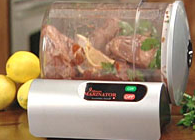
The 9-minute Marinator

I have a confession to make. I really get a kick out of watching Infomercials, especially the ones about products that have to do with the home (kitchen gadgets, cleaning gadgets, and furniture-related items).

Mike doesn't share my enthusiasm for Infomercials (I suppose few people do) ... except for ... the Infomercial on the 9-minute Marinator!

So last weekend, I decided to bite the bullet and shell out the money for an early boyfriend-girlfriend anniversary gift for my husband. And I ordered it. It was the first time I'd ever ordered something from an Infomercial.


(While looking for the above picture, I got jealous when I found out that the Canadian company that sells it offers a chopper and two vacuum-seal food canisters along with the marinator! The only thing that comes after "And wait, there's more!" on the Philippine version of the Infomercial is a pair of bendable chopping boards. Grrr.)

It arrived at home yesterday.

So last night we made tuna steaks. We threw in some lemon juice, butter, salt, and pepper along with the tuna, in the Marinator for 5 minutes, and grilled the tuna on our electric grille.

Tonight we'll try real steaks.

Yummm ..... I can't wait to get home.

Find other people blogging about:

Sunday, August 05, 2007

Composting.

The village where we live has implemented a composting policy. The garbage men who come to our village will no longer collect our biodegradable garbage: residents are encouraged, instead, to compost all of our biodegradable trash.

For P600 each of us can buy a composting bin and 25-kilo sack of special composting soil. The composting bin is a plastic drum with the bottom cut out and holes drilled into the body, meant to be placed in the garden. However, any container can actually take its place; some people just use a circle of wiremesh (the wire improves air circulation) in their garden. The soil has some fertilizer and microorganisms in it already, to make the decomposition process happen more quickly, but again, regular soil can also be used. Some people don't use soil at all, but without soil, it might be slightly more difficult to find the right mix of organic trash to activate the decomposition process; moreover, one has to be a little more judicious about what kind of organic waste to compost (see below).

What can be composted? Technically, anything that's organic, although websites I consulted recommend that manure and urine from carnivorous animals (such as dogs and cats), diseased plants, and ash from charcoal not be home-composted, because the heat of home composting piles rarely reaches the intensity necessary to kill pathogens that can spread disease and illness to other plants or, if the waste seeps into water sources, to humans. When soil isn't used, it's also a good idea to avoid using meat, milk, dairy and fish products, as rodents and other animals may come and try to dig these out of the composting heap. Those planning to use the compost to fertilize vegetable patches might also want to avoid adding weeds to their compost pile, so the weeds don't spread to their vegetable patches. Wood scraps (from untreated wood), ash from untreated wood, food scraps, fruits and vegetables, garden trimmings, shredded black and white newspaper, shredded clean (unwaxed) paper, shredded toilet paper, manure from vegetarian animals, shredded cardboard rolls, shredded cardboard cereal boxes (if unwaxed), coffee grounds and filters, cotton or wool (i.e., natural) rags, lint from driers and vacuum cleaners, crushed eggshells, hair and fur, nut shells, tea bags, sawdust, and dead leaves all can be composted without problems.

The composting process is simple. First, organic trash needs to be cut into small pieces to hasten decomposition. It is best if the bottom of the composting heap is well-aerated, either by using a composting bin with holes in the bottom, or by putting an initial layer of wood materials and scraps that can allow air to pass through. After this, the bottom layer of the heap should be a two-inch layer of soil or nitrogen-rich garbage ("green stuff" such as fresh grass clippings, kitchen vegetable scraps, manure from vegetarian animals, or [brace yourself for this] a bit of human urine). The next layer (no thicker than two inches) can be any kind of organic garbage (this is the layer where carbon-rich waste is concentrated: "brown garbage" such as dead leaves, newspaper, and wood scraps), followed again by a two-inch layer of soil or nitrogen-rich garbage. As trash accumulates, this process of layering continues. It is helpful to keep the heap covered so it doesn't get too wet with rain, and so rodents or animals will not try to dig through the composting heap.

If your compost bin is made up of a lot of food, watering the compost heap isn't necessary, because kitchen scraps contain a lot of water. (I think the humidity of the Philippines also helps to keep the composting heap moist.) Compost bins composed of very dry materials, however, need to be watered a little until damp (not too much!) as each layer is added.

In ideal conditions, composting takes just three to six weeks. The compost heap will first warm up then will begin to cool. In ideal conditions, it should emit a sweet, earthy aroma. When conditions are less than ideal (e.g., heap is too dry, too wet, or has too little nitrogen-rich materials), decomposition may take a bit longer. You can correct this easily, depending on the problem. If the pile is not warming up, add more nitrogen-rich materials, sprinkle with water, and turn the pile a little with a rake or shovel. If the pile has a foul garbage-like odor, add more nitrogen-rich materials. If the pile is too wet and soggy, add more dry materials (such as dried leaves), and turn the pile.

After the compost heap is warmed up and then cooled, the compost heap is almost ready! Turn over the pile, to allow the bottom to dry. When done, the compost can be used as a thin layer of fertilizer for the garden and for house plants.

=======

Our homeowners' association in our village resells composting soil, but if you're interested you can contact Lacto Asia Pacific Corporation, the suppliers of Happy Soil at 7761511 or email address lactoasia[at]yahoo[dot]com.

Find other people blogging about:

Saturday, May 19, 2007

A trip to Assad Mini Mart

I looooove Asian cuisine--Filipino, Singaporean, the different regional cuisines of China, Malaysian, Thai, Vietnamese, Indian, Japanese, Korean ... you name it! (Well, with the exception of some North Indian and West Asian/Middle Eastern dishes: I'm not really into beans.)

And the secret to authentic Asian food, as most people know, is finding the right flavors and spices! Using, for example, Japanese soy sauce for a Chinese dish is simply wrong, and Malaysian food without lemongrass just isn't the same ....

Of course, it isn't always easy to find spices which aren't endemic to the Philippines. A few substitutions can be made, because a lot of ingredients in other Asian countries have parallels in the Philippines. (You can, for example, use Filipino patis instead of Thai patis, although it's harder to use Filipino shrimp bagoong in place of Malaysian belacan, because the taste just isn't the same.)

But oh, the difference it makes when you find authentic ingredients!

A few months ago, a friend told me about the Indian groceries along U.N. Avenue, although I never got the chance to go. Today, however, I had an errand to run in Manila. And while we were there, Mike had the brilliant idea of eating at a little Indian eatery he had seen across Unilever. It was--you guessed it--right beside the row of Indian groceries!


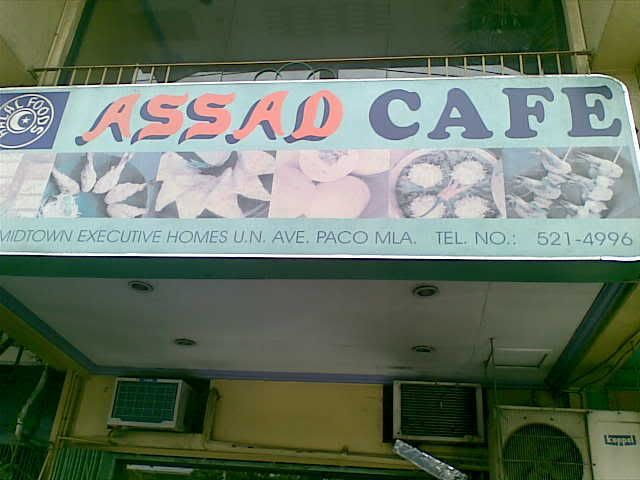
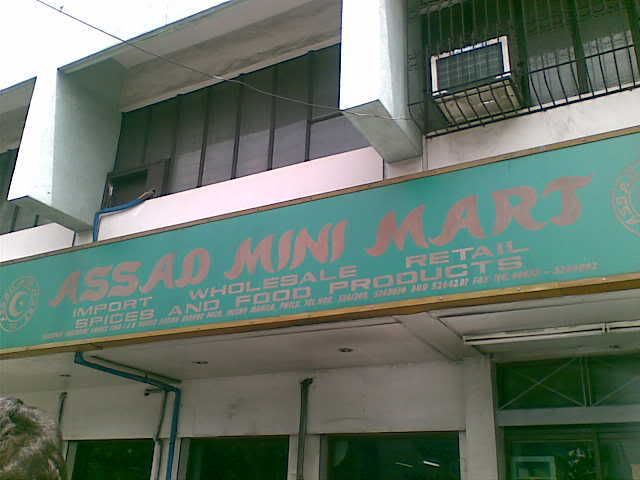
So after eating scrumptious mutton curry and shrimp masala at Assad Cafe, Mike and I trooped to Assad Mini Mart, just a few doors away. I wanted to buy some ghee, but it came in a giant box and had an August 2007 expiry date (I told Mike: "I don't think we'll be having that much Indian food between now and August). It was also a little expensive. So instead we settled for dry spices and different kinds of masala powder. I was also tempted to get some lentils and basmati rice, but we didn't bring a lot of money for this excursion, so I changed my mind at the last minute.


I remember how we learned in history class that one of the principle motivators for the Europeans to explore the world was the spice trade. People actually died for these spices! And now all a Pinoy needs to do to get a bag of spices is to take a trip to U.N. Avenue. Hmmm.

Find other people blogging about:

Wednesday, May 09, 2007

Bulk Cooking

Although I haven't done it in a systematic way, I've been interested in the concept of "bulk cooking" (also known as "freezer cooking").

Bulk cooking is the practice of cooking huge amounts of food that are suitable to freezing, as infrequently as once a month (hence, it's other name, "once a month cooking"). All that food is stocked in the freezer, and the family simply warms up food as they go along. The result is that the family (or whoever does the cooking in the family) is able to save time and energy by having to cook less frequently.

There are other variations of bulk cooking as well, such as preparing ingredients for freezing, but not doing the actual cooking until the meal itself. The most basic form of bulk cooking, and the kind I'm inclined to, is simply doubling or tripling dinner recipes that are suitable to freezing, so that there are at least enough leftovers for lunch and maybe one additional dinner. (More tips for a less radical form of bulk cooking.)

I'd like to do this simplified form of bulk cooking a little more systematically, so I did some research about the tools required. The most obvious, of course, is some extra freezer space, which our freezer has a lot of, since we have a separate freezer. Having an oven is also helpful, because then you can bake more than one meal at a time. A microwave makes defrosting and reheating a cinch (and minimizes the softening of reheated veggies, or the overthickening of reheated reheated sauces). Depending on the amounts you intend to cook, you might eventually feel the need for bigger mixing bowls. You'll need a storage system, such as Tupperware, freezer bags (though they are more environmentally-harmful), or aluminum pans. Finally, bulk cooking advocates recommend that you have a marking pen on hand so that you can label and write the date that you prepared each dish.

Another thing to learn is which recipes are suitable for freezing, and which aren't. This article lists food items that don't freeze well. There list includes:
  • fried food

  • cake icings made with egg whites

  • custard and cream fillings

  • soft cheese

  • mayonnaise

  • sour cream

  • potatoes, when cooked in soups and stews


I'd also add mashed potatoes to the list.

On the other hand, stews and casseroles generally keep for up to three months, and sauces, for even longer, so that's a good place to start. (Personally I find that most stews taste better when reheated.)

Find other people blogging about:

Tuesday, May 08, 2007

Twenty Steps to a Healthier Kitchen

Now that Mike and I are in our 30s (just barely), we're getting more health-conscious. In our 20s, being healthy for us meant doing (or trying to start doing!) some kind of physical activity to keep us fit. But now that we're in our 30s, being healthy isn't confined only to the activities that we do, but also, what we eat.

The great thing about cooking our own meals is that we have greater control over what goes into our body. I've become more conscious about this over the last few months and have kept health, instead of just price, as one of my main criteria when choosing food while supermarketing.

We're far from being poster-children for health, of course. But we're trying, little by little, to be healthier. Allow me to share with you a list of some of the steps we've been taking, or have been trying to take, in the Palacios kitchen:

  1. Never buy carbonated softdrinks (sodas) in the grocery unless you're hosting a party. Replace softdrinks with healthier alternatives like fruit juice (our favorite of late is calamansi concentrate), or the best alternative of all: water.

  2. Shell out the extra money to buy the leanest (or at least the leaner) meat at the butcher's. It may seem like it's hurting your pocket now, but remember that health is a more important form of wealth.

  3. Always have fresh fruits in the house, and keep them within easy reach. When your stomach is craving for a midday snack, reach for a banana instead of a bag of potato chips.

  4. Speaking of potato chips: when you're in the supermarket, skip the "junk food" aisle altogether. The only time you should buy potato chips is if you're going on an out-of-town trip.

  5. If your family has a history of hypertension (which is true for both Mike's and my families), then you should be watching your salt intake. Use herbs and spices instead of salt to flavor your food. Stock up on a variety of dried herbs and learn which goes with which food so you can easily add them to the dishes you're cooking.

  6. Speaking of salt: keep the salt shaker away from the dining table.

  7. Filipino weight-watchers: go easy on the rice. Control your rice portions by serving rice in individual rice bowls at the dining table.

  8. Milk isn't just for kids. Have a glass of milk (low-fat or skim, now that you're an adult) every evening, before going to bed. It's good for digestion, too.

  9. Carrots are wonderful! Super-rich in vitamins, barely any calories, and fantastic for main courses, soup, snacks, salad, or even dessert. Plus they keep very well so you can store them in your refrigerator longer than you can greens. Buy carrots every time you go to the supermarket and look for different ways to slip them into your meals.

  10. Buy salad greens every time you go to the supermarket, and always have some salad dressing (whether home-made or store-bought) handy at home, so that you'll be ready to eat a salad in no time. A note when buying lettuce: choose deep green (or red, as the case may be) lettuce like Romaine. Stay away from iceberg lettuce! Not only does iceberg have no nutritional value; it's actually bad for you! (Update: See comments section for more on this.)

  11. Olive oil and butter have about the same calorie count, but olive oil is healthier. It's also a lot more expensive, however. When making a recipe that calls for a lot of butter, consider replacing a third or even half of the butter with olive oil.

  12. And instead of using butter, use low-fat margarine instead.

  13. Buy whole wheat instead of white bread.

  14. Trim the excess fat of pork, beef, and lamb before cooking. And whenever you can, take the skin off the chicken. Chicken skin is almost pure fat.

  15. Speaking of chicken, don't pour the drippings back onto chicken when serving it ... (although I can't resist when it's a roast, because a roast chicken without drippings just isn't the same)!

  16. Consider using honey instead, when a recipe calls for sugar.

  17. Cut down on pan-fried and deep-fried food. Instead, bake, poach, steam ... and when you need to fry, stir-fry (i.e., chop your food into small pieces and fry it in a wok using a very small amount of oil).

  18. When you go to the butcher, have your meat bagged in exactly the amount you will need for cooking one dish. (For example, Mike and I always ask that our ground beef be bagged in bags of 200 to 250 grams each: one bag is thus exactly enough for one meal for the two of us.) That way, you never cook or eat more than you should.

  19. Limit the treats. Mike and I only allow ourselves to buy one kind of dessert when we go to the supermarket: dark chocolate.

  20. For the sake of your health and your wallet, always have a grocery list when you go to the supermarket, and follow it as much as possible. This way, you don't end up buying impulse purchases.


Find other people blogging about:

Spices and Surprises

Mike and I came from England a few weeks ago, where Mike had to attend a business conference. Afterwards I headed to Hong Kong and Macau, while Mike headed home to the Philippines.

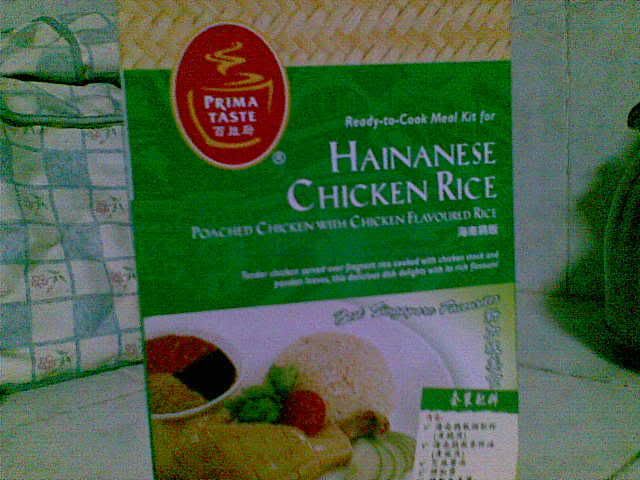
While we were away I stocked up on yummy spices that aren't easy to find in the Philippines. Here's our loot:


Everything you need for Hainanese chicken, in one box (except the chicken)! How convenient is that!


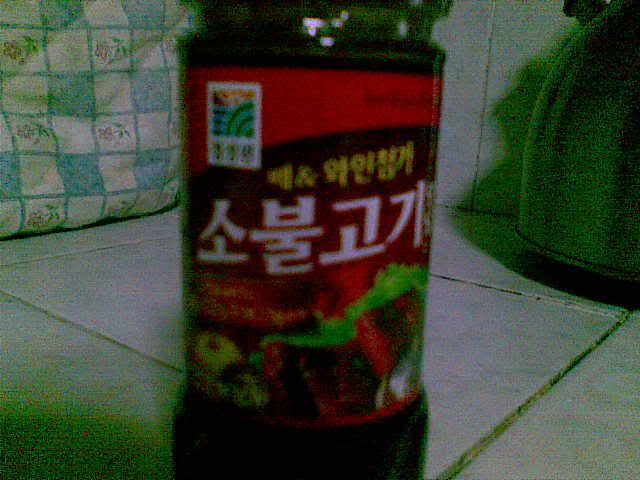
Beef bulgogi sauce.


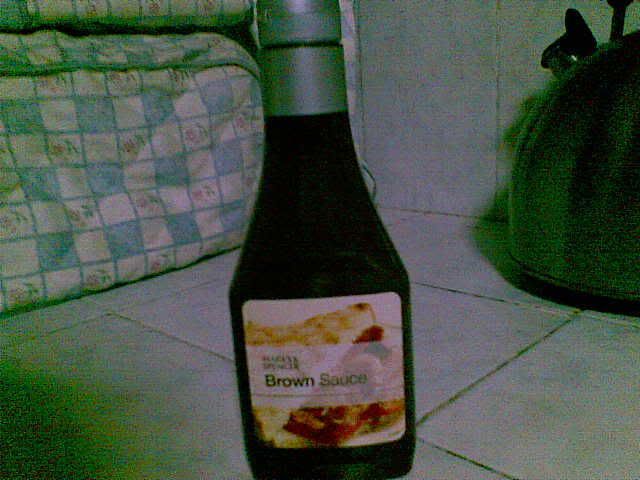
Brown sauce. A must-have for a true full English breakfast.


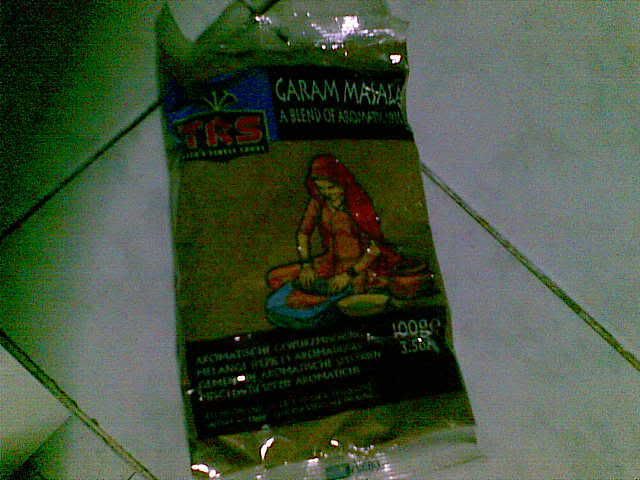
Garam masala.


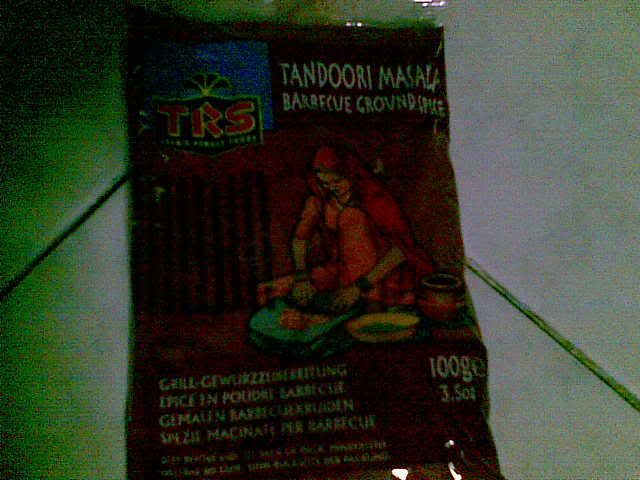
Tandoori powder.


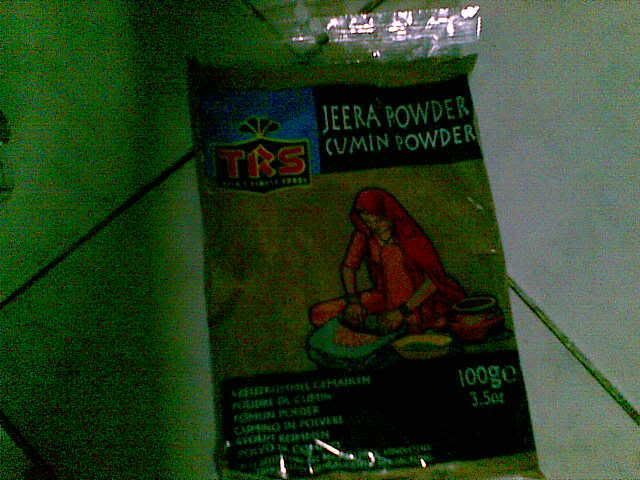
Cumin powder.


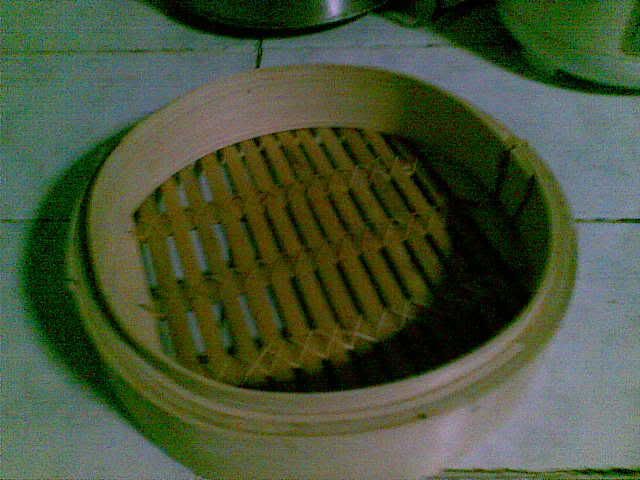
And I also got a bamboo steamer!


Find other people blogging about:

Monday, March 12, 2007

Baguio vegetables

Mike and I spent the weekend in Baguio with our friends Anj and Jan and boy, what a food trip! Among the food highlights:

  • An accidental trip to the Strawberry Farms. From Tam-awan village, we decided to look for the vegetable trading post in La Trinidad. We couldn't find it; instead we chanced upon a sign directing us to the La Trinidad strawberry farms! We happily walked among the strawberries in the field, taking pictures. We sampled strawberry taho, strawberry wine, and strawberry ice cream, and ended our visit by buying seven kilos of strawberries among the four of us, and a few jars of strawberry jam. Yum!
  • Dessert at the Manor. We discovered that the Manor has excellent cakes and pastries! Sinfully delicious!
  • Chocolate baterol at John Hay. Mmmm!
  • Mongolian food at Oh May Kahn. Owned by the family of a batchmate of ours, Oh May Kahn has scrumptious Mongolian barbecue and a delicious a la carte menu as well.
  • Soy coffee at Ben-hur Villanueva's gallery, Arko ni Apo. Sculptor Ben-hur Villanueva was Mike and Jan's art teacher in grade school! We introduced ourselves and ended up spending about an hour with Ben-hur and his gracious family. They served us interesting soy coffee made even more interesting with the wonderful company.
  • Lunch at a Korean restaurant on Legarda road (I think). We enjoyed a scrumptious spicy chicken dish.

  • Fresh vegetables from the Baguio market. Baguio vegetables!!! Oh, if only Metro Manila had vegetables as fresh and as cheap as Baguio does, we'd all be a much healthier city. I found watercress--a rarity in Manila (and made myself some Vietnamese Shaking Beef salad today). Fresh parsley was P20 per kilo and for five pesos I now have enough fresh parsley to serve it on every single dish for the next two weeks.


Happy happy joy joy.

Find other people blogging about:

Wednesday, February 14, 2007

Lettuce-growing

Believe it or not, I'm still ill! (It's been six weeks now, and I've been to the doctor thrice.) My taste buds are still affected so I still can't do any kitchen experiments and the only cooking I've done has been following recipes.

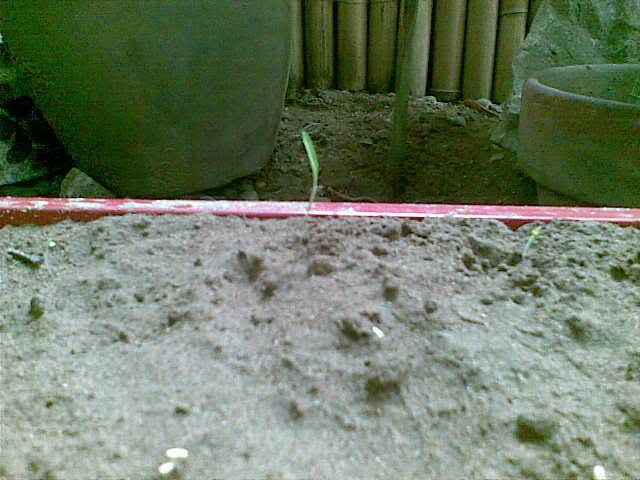
But in the meatime, the lettuce-growing project is underway. Last Saturday, I bought a small planter and had it filled with soil, but I hadn't read up on lettuce-growing yet. After doing some research I learned that the best way to grow lettuce is to plant seeds first (excuse my ignorance, the last time I did any gardening other than weeding was in 4th grade for, well, gardening class) and then transplant them. I also learned that the planter I chose might be a little too small and might only be able to hold two heads of lettuce at a time. So I used the planter I bought for the seeds and then this weekend I'll get a larger planter for the lettuce heads.


So far, so good. I kept the planter in our indoor garden to prevent the birds or cats from disturbing them. Today is Day 5 and some shoots are peeking out of the soil already. I looked at them with delight this morning and Mike himself had a moment of wonder when he said, "Cool! It's like you're participating in God's creative act."

Find other people blogging about:

Sunday, January 28, 2007

Some oily lessons from Alton Brown

The smoking points of olive oil and butter are the lowest.

The smoking points of canola and corn oil are average.

The smoking point of safflower oil and peanut oil is among the highest.

Why is this important to know?

Because when oil reaches its smoking point, it begins to taste bad, so when you cook food that needs to be really hot, you don't want to use oil with low smoking point.

This means, then, that when searing steak, you want to use an oil with a lower smoking point. Not olive oil or butter, then.

I read elsewhere that vegetable oil also has a low smoking point.

Helpful advice, isn't it?

Find other people blogging about:

Sunday, January 21, 2007

New cookbook

After the success of today's Korean lunch, Mike very kindly bought me a Korean cookbook when we went to the supermarket today.


We also have two new Filipino cookbooks from Angie, who gave them to us for Christmas.

I'll let you know how the recipes turn out.

Find other people blogging about:

Tuesday, January 09, 2007

Twenty-one tips for a thriftier kitchen!

Sorry, I'm still ill so my tastebuds are shot. As a result, I still can't recommend any recipes.

However, an email conversation with my friends and a post on a friend's blog have me thinking about ways to save money. Here are some kitchen-related tips for saving money:

(1) The simplest: cook instead of eating out! And I don't just mean lutong-bahay; instead of eating expensive meals in restaurants, Mike and I try to recreate our favorite restaurant meals right in our kitchen. Even if that means buying more expensive ingredients; it still comes out cheaper than eating in a restaurant. We encourage each other by reminding each other how much we save by eating in. ("This meal only cost us P150; if we had eaten this same meal in a restaurant, it would've cost us P300!")

(2) Bring lunch to work. We don't do this often, but every now and then Mike brings lunch to work.

(3) I don't do this myself, but at my in-laws' house, fish is fried in the backyard instead of in the kitchen. How does this save money? You don't need to switch on your hood or exhaust to get the smell of fish out.

(4) Drink water instead of sodas or instant drinks. I'm one to talk; I drink so much iced tea. Nonetheless, this is on my list of New Year's resolutions: water is cheaper, and it's healthier as well.

(5) Brew your own coffee. If you're one of those people who buy your daily coffee from Starbucks, then it's time to get a coffee-maker and make your own coffee at home. Knowing how much more one spends at a coffee shop over and above the material cost of a cup of coffee, Mike (the coffee-drinker of the two of us) has a good rule of thumb: he only goes to coffee shops to meet up with business associates or friends, and only if he intends to stay there for awhile. That way, he's paying for the use of the place, not for the coffee. (And the nationalist in him is biased towards local coffee shops like Figaro or Coffee Bean and Tea Leaf.)

(6) Buy a water filter/purifier instead of buying bottled water. Or, to save even more money, just boil your water (two minutes at full boil) and let it stand overnight. It's better for the environment too: no plastic bottles.

(7) Use a gas stove rather than an electric stove. In the Philippines, LPG is much, much cheaper.

(8) Learn to use extenders in food: bread crumbs in ground beef, for example.

(9) When buying meat, have the butcher pack the meat into portion-sized bags already. When Mike and I buy ground beef, for example, we ask the butcher to put it in bags of 250g portions. That way, we don't cook more than we need. (And it regulates our food intake as well!)

(10) Learn to make your own bread, yogurt, pancake mix, syrup, sandwich spread and jam. I don't do this but my father-in-law does.

(11) Grow your own vegetables. Again, something I haven't tried, though my in-laws used to do this as well.

(12) Save your lamb and chicken bones. Keep them in a sealed bag or container in the freezer. When you have enough, make your own lamb or chicken stock.

(13) If you buy deli cold cuts, consider buying the ends rather than the middle cuts, depending on what you intend to use the cuts for. They're cheaper.

(14) Save your cooking oil! It can be reused twice or thrice. Make sure, though, that you separate the oil that you use for fish, the oil that you use for meat, and the oil from longaniza or bacon fat (I learned this from our housekeeper when I was young). (I suppose this is the Philippine version of the Western tradition of never washing cast-iron cookware [they just wipe it down].)

(15) Buy energy-saving freezers and refrigerators. They're on all the time, so make sure they don't cost more than they have to.

(16) If you have excess freezer space, make ice. Excess freezer space wastes electricity (unlike excess refrigerator space which actually saves electricity). We often have excess freezer space (because we have a separate freezer), so we make ice in bags and sell them to our neighbors. (In the summer our housekeeper makes ice candy for sale as well!)

(17) Buy in bulk.

(18) Don't buy branded products when you can avoid it. We recently started buying homemade (non-branded) detergent, laundry bar, fabric softener and dishwashing liquid. It's less than half the price of stuff at the supermarket! At the grocery, goods which don't have famous brands are also usually a lot cheaper than the P&G/Unilever goods; with P&G/Unilever, you're just paying for all the marketing.

(19) If you just intend to toast your bread, freeze the loaf to make it last.

(20) Eat more veggies and less meat! Cheaper and healthier!

(21) Use rags instead of paper towels. And make rags from old cotton clothes rather than buying new ones. To disinfect rags and sponges pop them in the microwave after washing (30 seconds when dry, a minute when wet).

(22) Cut worn bath towels into smaller pieces, and hem. Ta-dah, a new hand towel for the kitchen!

(23) If you eat a lot of bread, collect your own breadcrumbs.

(24) Before you do your supermarketing, check your pantry and refrigerator and make sure that you've used up or have plans to use up ingredients from your last trip. The most wasteful thing is allowing food to expire before you've touch it!

(25) If you have a garden or a big-enough balcony with potted plants, make your own compost from kitchen waste.

(26) Reuse water. The rinsing water for your dishes or laundry or from washing rice can be used to water the plants.

(27) Segregate your rubbish. It won't necessarily save you money, but it will help save the earth. :)

Find other people blogging about:

Wednesday, January 03, 2007

What to do with New Year's fruits

Happy New Year!

I've been ill and haven't had time to putter around the kitchen, but if you want ideas as to how to finish eating all those round fruits you bought for your New Year's table spread, here are some suggestions from older posts:

Saturday, December 30, 2006

Cooking tips for Filipino and Asian food, 1

I found a webpage offering cooking tips for Philippine cooking, very helpful for beginner cooks like me.

A sampling of what you'll find on the page:
  • Grate a quarter of a small onion and add it and a dash of sugar and salt to the water in which you boil frozen or canned vegetables to improve the flavor. Or add a dash of MSG, garlic powder, pepper and onion flakes or powder to the salted boiling water before adding the vegetables for a richer flavor.

  • When broiling steaks or chops, put one cup water in the bottom of the broiler pan to prevent grease burning on the pan, eliminate smoke, make pan easy to wash and catch the drippings for the gravy.

  • If a dish is too salty, slices of raw pared potato added to it while cooking will absorb excess saltiness. When cooking adobo and it turns out too sour, add sugar.

  • To eliminate fishy odor, rub fish inside and out with a slice of lemon.

  • To keep raw fish fillets fresh and odorless in the refrigerator, rinse in a solution of 1 tbsp. lemon juice and 1 cup water, dry thoroughly, wrap and refrigerate.

  • To avoid tears when cutting onions, leave them in the refrigerator for a few days before using them. (Or peel and cut them in half under cold running water. Keep under running water for about a minute or let soak in cold water for a time before slicing.)

  • Roll lemon with palm over a hard surface or heat lemons before squeezing to get more juice.


Read the other tips here. If you noticed, I numbered this post "part 1," because I do hope I can add some of my own cooking tips in the future.

Find other people blogging about: